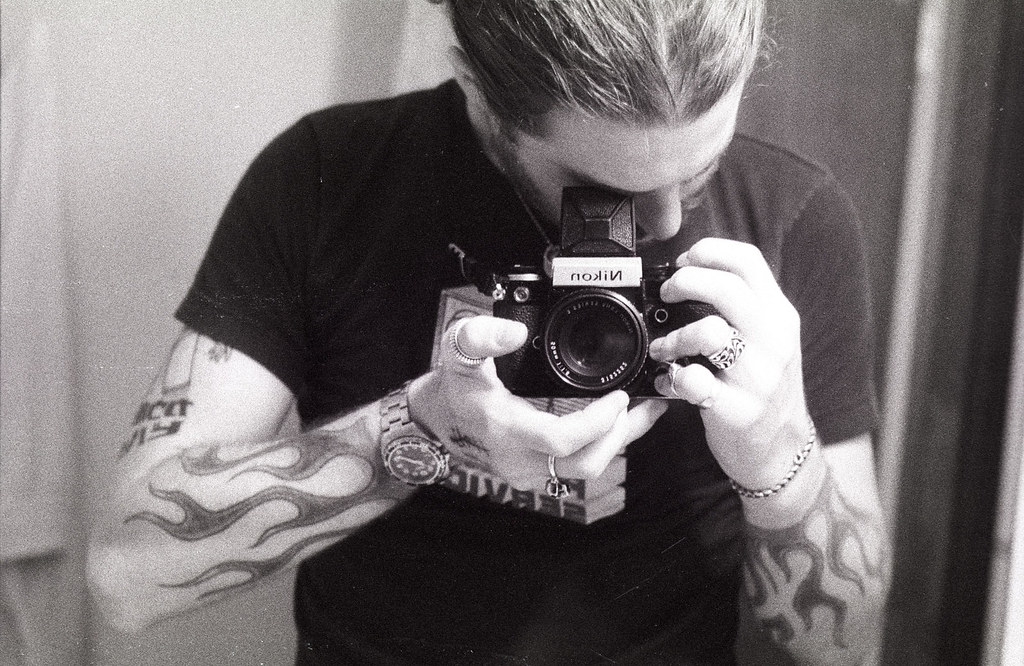
Nikon F2 Nikon 55mm f/3.5 AI macro lens with Extension Tube and Nikon PB-6 Bellows Extension Vivitar 285HV x 2 with DIY IR gels Efke IR 820 35mm film D-76 - 8min - 20 degrees celsius
First attempt at infrared portraits using efke IR 820.
This is the result of trying to salvage an extremely underexposed negative through scanning. The initial preview showed pure black. I brought out the image by pushing it as far as i could using levels and curves in the Imacon scanning software.
The specs are not grain but minuet amounts of dust that wouldn't usually be scene in a normal scan. Bringing the image out brought the debris out as well.
I don't have any IR filters, so I shot in the dark using modified Vivitar 285HVs, one with a double layer of processed unexposed 35mm Ektachrome (reducing it to about a 1"x2" flash area) and another with a red gel folded over 16 times (acting also as a diffuser).
I metered at 100 iso based on the film's data sheet (25 iso when using IR filters).
The gelled flash produced more visible light metering f/3.5 at about a foot, while the chrome flash produced more pure IR light metering f/8 at about a foot, both at full-power. Though, I'm not entirely sure how well my Sekonic L-358 would meter pure IR light.
I processed in D-76 at 20 degrees celsius for 8 minutes. My chems should be good, but it's possible they could be getting weak.
I'm not sure exactly where everything went wrong.
Next time I will meter at 25 iso. I will use sheets of processed unexposed 4x5 Ektachrome (instead of 35mm) with larger more powerful strobes and/or directly on the lens as a makeshift IR filter. Mamiya C220 Mamiya-Sekor 80mm f/2.8TLR lens efke IR 820 120 film (modified) Vivitar 285HV flash Imacon multi-format film scanner